Comprehensive Pelvic Floor Healing
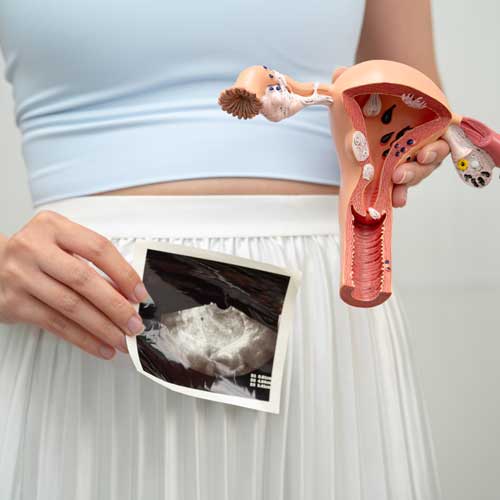
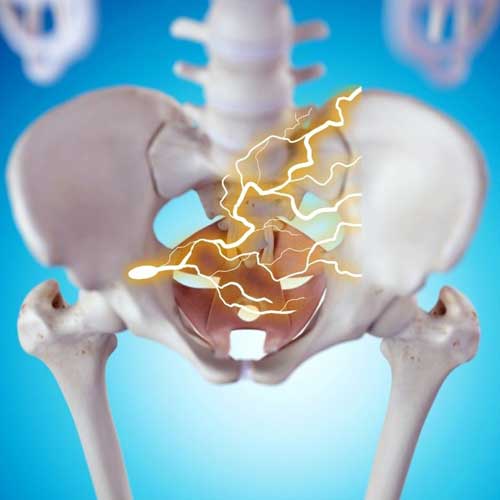
Leaking? Prolapse?
Can't Stop Running to the Bathroom?
If Kegels, breathing exercises, and “just squeeze your tummy” didn’t help, you’re not broken ... you just need a different approach.
Your Pelvic Floor Problem Isn't Just a Pelvic Floor Problem.
Your Bladder Problem May Not Be a Bladder Problem.
If you have any of these – or it just doesn’t feel right down there – keep reading!
Pelvic Organ Prolapse
Incontinence
Postpartum Recovery
Urgency/Frequency/
Overactive Bladder
Expecting or After Hysterectomy
Peri/Menopause
Hypertonic or Tight Pelvic Floor
Uncomfortable Intimacy
Does This Feel Like Your Life?
Here's What I Know to Be True:
You're not broken.
You're not "too far gone."
You're not overreacting.
And you're definitely not alone.
Here’s what nobody’s telling you:
Your pelvic floor doesn’t work alone. It’s part of your whole body – and when the whole system isn’t coordinating properly under effort, that’s when pressure goes the wrong way and symptoms show up.
This isn’t weakness. It’s a coordination pattern you were never taught to see.
And patterns? Patterns can be retrained.
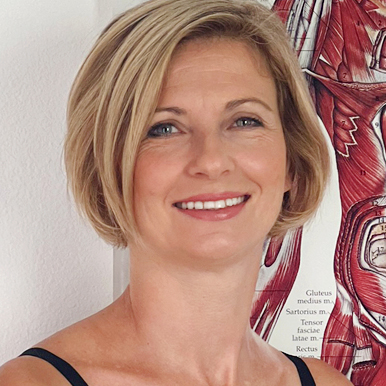
Hi, I'm Iveta.
And I specialize in whole-body pelvic health – retraining how your abs, core, hips, trunk, breathing, bladder, and pelvic floor work together so you can stop just surviving and start thriving.
Even when you’ve tried pelvic floor therapy and it didn’t work.
Whether you’re dealing with leaking, urgency, frequency, prolapse, pelvic pain, or a confusing combination – there’s a path forward that doesn’t require you to shrink your life.
You just haven’t been given the right strategy and support yet.
Moving, lifting, laughing, and living the vibrant life you deserve - that's what we're here to reclaim. Keep reading!
What’s keeping you stuck.
A.
Focusing on one body part in isolation
Stop treating your body like a machine. We are not made of interchangeable body parts like a car. You can’t repair one body part and ignore the rest of the body.
You can’t focus on the bladder in isolation. It sits in the pelvis.
You can’t focus on the pelvic floor only. It’s connected to your breathing and vocal diaphragms!!
The bony alignment of the pelvis impacts how your pelvic floor muscles fire.
The bony alignment is impacted by how you move. Your joints and muscles impact how you move.
What do I look at when I have client with a pelvic floor problem:
I look at her glutes, abs, breathing patterns, adductors, ribcage mobility, how she squats or sits down, how she moves!
Yep, you named it – THE ENTIRE BODY!
B.
Just doing the exercises
Here’s the plot twist that changed everything for me (and the hundreds of women I’ve worked with):
Doing more exercises won’t fix this if you’re performing them incorrectly.
Do you have any pelvic floor dysfunction? Then you are performing them incorrectly. Not because you’re failing – but because dysfunction means your body has learned compensatory patterns that sabotage even the “right” exercises.
Here’s the issue:
Any exercise can be done with bad form!
There’s no such thing as exercises for prolapse or for diastasis recti.
Those prolapse-safe exercises? You can still bear down on your pelvic floor and organs doing them!
It’s about technique and form not type of exercise!
(Oh, and if you were told not to squat with prolapse, how exactly do you sit down on a chair or toilet, please? Yes, you squat down. You cannot avoid squatting in life!)
Here’s the trick:
You need to learn how to move safely, not to avoid movement! That’s dangerous, especially as we age and leads to bone and muscle loss.
C.
Treating the symptom instead of the cause
Is your medical provider addressing the root causes or symptoms?
Why is your bladder so irritated?
Botox, medication, surgery, pessaries are not making you any stronger or any more functional and do not address what brought you to this page in the first place.
If you intend to take medication, avoid movement and use a pessary for the rest of your life, then please feel free to stop reading. You will be wasting your time.
When Pelvic Floor Therapy Doesn't Work
I often hear from women, “I tried pelvic floor therapy and it didn’t work.” I believe them because I have been there.
My pelvic floor therapist recommended Kegels and shut the door behind me. My orthopedic therapist dismissed after three months of zero progress. Here’s why I and other women have no or minimal success with exercises or therapy (also called rehabilitation).
Here’s where an average therapist or virtual program often falls short:
1.
Cookie-Cutter Protocols
Same exercises for everyone, regardless of your body, your triggers, your movement patterns, your life.
Just because you were diagnosed with prolapse or a weak pelvic floor, it doesn’t mean you should be doing the same exercises as everyone else with the same diagnosis!
How I do it:
I create a customized plan based on YOUR posture analysis and movement assessment (via Zoom). You’ll get exercises tailored to your specific body, your compensation patterns, and the exact movements that trigger YOUR symptoms.
2.
Focusing on the Wrong Thing
Most therapists zero in on the pelvic floor and ignore the rest of your body – your glutes, abs, breathing patterns, ribcage position, and pelvic alignment.
But we are not machines. You cannot isolate one body part.
The pelvic floor and pelvic organs are impacted by the pelvis. The pelvis is impacted by your ankles, your hips, your ribcage, your breathing. Everything is connected.
When your ribcage flares, pressure goes down. When your hips are tight, the pelvic organs are squeezed out. When your back is tight, your abdominal wall lengthens, when your abdominal wall lengthens, pressure is directed out and down on the pelvic floor and organs.
Treating the pelvic floor alone is like trying to fix a leaking roof by repainting the ceiling.
How I do it:
xxxxxx
3.
Focusing on Quantity instead of Quality of Movement
Have you been exercising for months with minimal progress? Doing 3-4 set of 10-15 reps?
Doing more exercises won’t fix this if you’re performing them incorrectly.
Do you have any pelvic floor dysfunction? Then You are performing the exercises incorrectly by default. A dysfunction means your body has learned compensatory patterns that sabotage even the “right” exercises.
Tight “cheater” muscles take over for weak muscles. Weak muscles stay on vacation despite a consistent and diligent exercise regimen. Frustration sets in and doctors are clueless. Surgery seems to be the only option. Wrong!
How I do it:
I take a whole-body approach. We start with a full assessment – how you stand, breathe, squat, and move – then retrain your entire system from the ground up. Your pelvic floor gets support from aligned hips, ribcage, coordinated breathing, and proper pressure distribution. We work on abs, glutes, abductors, and even your shoulder blades and neck! That’s how real healing happens.
4.
Missing Critical Assessments
Most pelvic floor therapy evaluates the pelvic floor in isolation – but ignores how you actually move through your day.
How you sit down. How you bend over. How you lift. How you walk. How you breathe under effort.
It’s like fixing a crack in your wall without checking if your foundation is settling. You might patch the surface, but you’re missing what’s actually causing the damage.
Your urologist did the same thing with your bladder – tests, maybe medication – without ever looking at your pelvic alignment, breathing mechanics, or the tension patterns creating the urgency in the first place.
How I do it:
I assess how your whole body moves – your squat mechanics, your posture, your breathing under load, how you distribute pressure during daily activities. Because if I only look at your pelvic floor, I’m missing the whole picture.
5.
The Handout Problem
You get a sheet of exercises to do at home. Sounds helpful, right?
Here’s the issue:
Those corrective exercises are highly technical. You’re given a starting position and an ending position – but between those two points? There are a million ways to do it wrong.
A slight ribcage flare.
Holding your breath.
Compensating with upper abs.
Gripping your pelvic floor or glutes.
And because your body already has dysfunctional patterns (that’s WHY you have symptoms), you’ll naturally default to those compensations – even when you’re trying your hardest.
A generic handout can’t see:
- Your unique limitations
- Your specific breathing pattern
- How YOUR ribcage sits when you move
- The way YOUR body compensates under fatigue
So you work hard. You’re consistent. You see limited results.
You need supervision. You need eyes on your form. You need someone who can see what you can’t feel yet.
How I do it:
You get an extensive, constantly growing video library with:
- Detailed exercise tutorials and lectures
- Troubleshooting guides for common mistakes
- Modifications for all levels and limitations – if you can’t do a movement, there’s an alternative for YOUR body
- New exercises and solutions added regularly based on real client questions
6.
Left to Figure it Out Alone
Once you leave the appointment, you’re on your own. No help when symptoms flare. No one to ask when real life throws you a curveball.
How I do it:
You’ll never be left guessing if you’re doing it right. You get detailed video tutorials that show you exactly what correct form looks like. Then you choose how you get feedback – Zoom sessions for live form correction or submit videos in our private community for personalized reviews – whatever works best for your schedule.
No waiting a month for your next appointment. You’ll know immediately if you’re compensating or what to improve. We’ll catch bad form before it becomes a habit that keeps you stuck. I will be watching your progress closely!
7.
The Transfer Gap
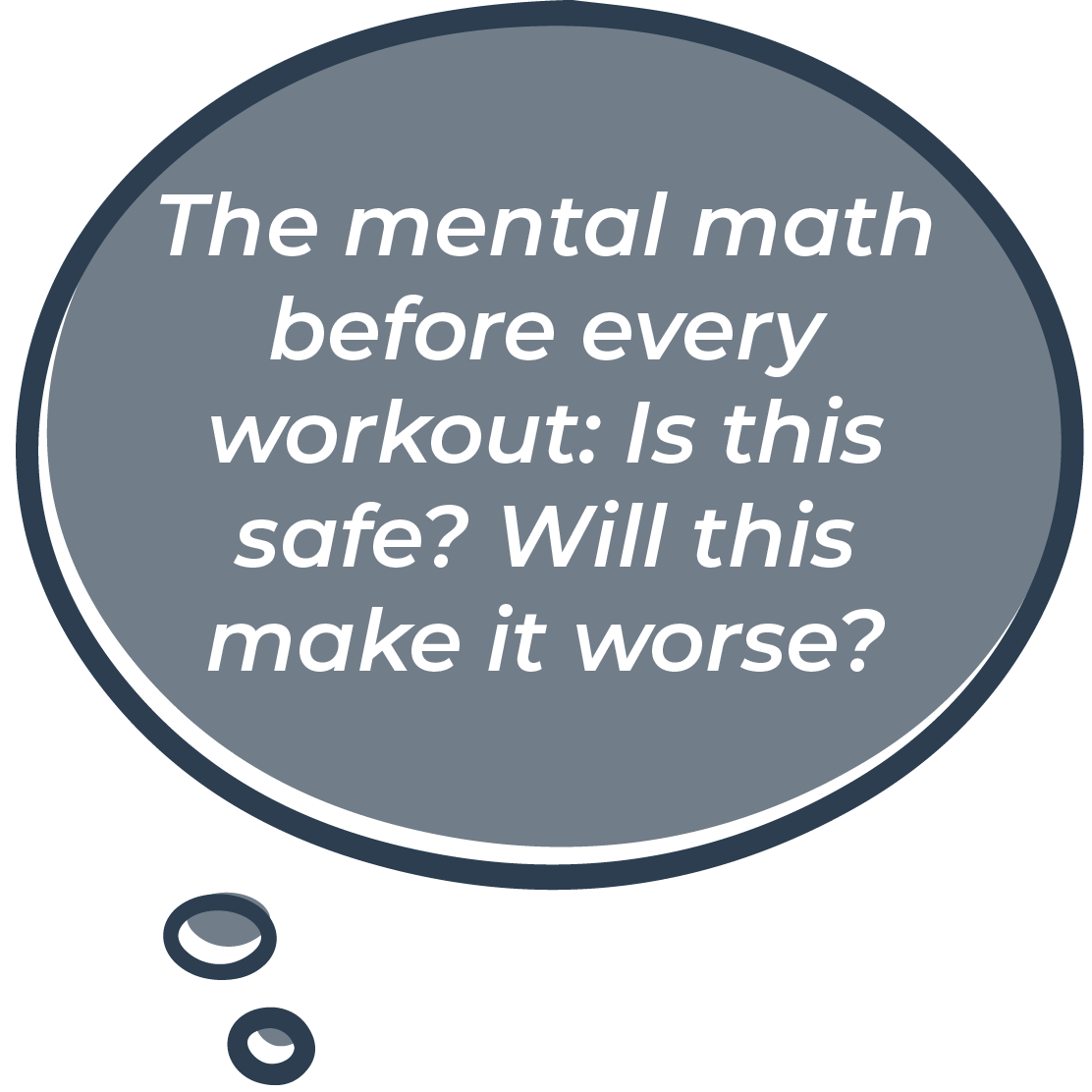
You can do the exercises perfectly on a mat… and still leak when you sneeze. Still feel the urgency hit when you’re nowhere near a bathroom. Still feel heaviness after a long day. Still brace in fear before every workout or before lifting your kiddo.
Because real life doesn’t happen on a mat in perfect conditions.
How I do it:
I teach you how every movement connects to your daily life – and how to turn everyday moments into strength-building opportunities. Cooking dinner becomes core training. Waiting in line at the grocery store becomes posture practice. Lifting your child becomes a coordinated movement pattern, not a moment of panic.
You’ll learn how to apply the strategy when it actually matters – during the sneeze, the lift, the long day – not just when everything is set up perfectly. No one has time to exercise for hours. So we make your life the workout.
"I did my PT exercises for 6 months. Turns out I was gripping my glutes the whole time, driving pressure DOWN. Nobody caught it because nobody was watching. Two weeks of real-time feedback changed everything."
Lauren .
It's Not Just Your Pelvic Floor.
It's Not Just Your Bladder.
It's Your Whole Damn Body.
Your breath creates pressure.
Your ribcage position affects where that pressure goes.
Your hips and outer hip stabilizers (abductors) control load distribution.
Your core coordinates (or doesn’t) with every movement.
Your feet and arches provide the foundation.
Your pelvis either squishes your pelvic organs or provides space to lift them up.
Your bladder sits in your pelvis – affected by pelvic alignment, surrounded by pelvic floor muscles, responding to abdominal pressure, influenced by tension patterns and breathing mechanics.
And your pelvic floor and your pelvic organs?
They are just responding to what all of those systems are doing when effort rises – when you cough, lift, jump, sneeze, carry, bend, or simply get through a long, tiring day.
When your bladder sends urgent signals every 10 minutes, it’s often not because your bladder is broken – it’s because the environment it lives in (your pelvis, your pelvic floor, your pressure system) is sending alarm signals.
What actually works?
Meet the Pelvic Pressure Reset™
This is the method that changes everything.
Not because it's magic. Because it's complete.
Whole-Body Assessment
Iveta looks at hip mobility, breathing patterns, ribcage mechanics, posture, pelvic alignment, and how you actually move through your day – not just your pelvic floor or bladder in when you lie on a table.
Progressive, Supervised Training
Iveta provides personalized exercise progression with real–time form correction, so you build capacity safely – and actually return to the activities you love.
Education That Empowers
Iveta helps her clients understand why certain movements trigger THEIR symptoms, why THEIR bladder reacts the way it does, how to spot THEIR compensation patterns, and what to do when life throws them a surprise sneeze or a heavy lifting day.
Ongoing Support
Get quick answers when questions arise. Iveta guides her clients throughout their entire journey, not just during an appointment. She believes in long-term strategies tailor-made to YOUR body and YOUR lifestyle – not generic quick fixes.
This is an Investment in Your Future
Let’s talk about what you’re really investing in.
Yes, your symptoms will improve. The leaking will calm down. The urgency will fade. The heaviness will fade.
But that’s just the beginning.
My goal is for you to emerge:
Stronger than before - because you've rebuilt functional strength from the ground up
Moving with confidence - in workouts, in sports, in your everyday life
Feeling sexy again - because your body feels like yours, not a fragile thing you have to protect
Bikini-ready - not because of how you look, but because of how you feel in your skin
With true mind-body connection - you understand your body's signals and know how to respond
"I came for the leaking. I stayed for the strength. I left feeling like the most powerful version of myself I've been in years - including before I had kids."
Jessica R.